| |
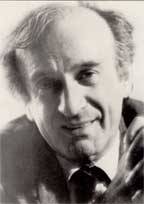
In 1977 when she was diagnosed with breast cancer, Deena
Metzger
looked for what might heal her and give her a chance
to live. She decided to create harmony where there
was war, to exhume and revitalize what was taken from
her and to transform what limited her.
“Creativity makes everything possible. Our bodies
know this and respond.” Early on her intuition
told her that her cancer was related to silences that
had festered within her. She took her typewriter to
the hospital and wrote down what came to her. She discovered
a voice who wanted her to die. It was a punitive voice
who told her her life did not matter, that she was
not entitled to live with zest or to fully partake
in life.
She decided the voice was from our culture’s
attitudes toward women. Earlier, she hated her body
and had bouts of anorexic-like eating. She was trying
to do away with herself by dieting. She knew that what
was lethal to her was not lethal to her alone. She
decided to take a stand against the death forces and
become a “warrior.”
After reconstructive breast surgery failed, she had
a tattoo of leaves, flowers and a bird drawn over the
scar where her breast used to be. She knew she needed
her body to live. When she began to love her body more
than when she had two breasts, she got the idea for
the poster. “I was feeling great about my body
and was feeling healthy and alive and I wanted people
to know that.”
Metzger used creativity as a gift from another realm.
She says we can use this gift
to restore and reclaim what is lost or buried. We
can use creativity to integrate what has been alienated
and to reconstruct a scattered self which can go beyond
our furthest limits. After nurturing this gift, we
pass it on to others.
The Deena Metzger interview is just
one of many I’ve collected since 1987 when I
started interviewing people who have positively transformed
in the wake of a shattering loss. They reworked the
symbols and images in the trauma when helping others.
They used creativity to convert pain and waste into
truth and beauty. They used creativity to give the
dead a posthumous life.
Many of the survivors I interviewed have international
reputations and are deeply engaged in productive activities – changing
public policy, publishing books and articles, producing
films and helping other survivors.They focused on hopeful
visions of the future not on what they could no longer
have or do. They all found ways to let go of bitterness
and hate and accepted the dark parts of life without
being defeated by them.
In the words of Lillian Smith, they taught “the
terrors of nature and their world to sing.” Their
stories may help us produce treatments for those who
fare less well in the trauma’s wake.
Many of the survivors I interviewed are public figures.
Among them are United Nations Ambassador and poet Armando
Valladares who spent 22 years as a political prisoner
in Cuba, Senator Max Cleland who lost two legs and
an arm to a grenade in Vietnam, author Andre Dubus
who lost the use of his legs in a car accident, Anne
Capute a nurse who was tried for murder after giving
morphine to a patient dying of cancer, concentration
camp survivor and Nobel Peace Prize winner Elie Wiesel,
Reverend Jeb Stuart Magruder who went to prison for
his role in Watergate, AP reporter Terry Anderson who
was held captive by terrorists for eight years, journalist
Mike Wallace who lost a son in a climbing accident,
Rabbi Harold Kushner, the author of When Good Things
Happen to Bad People whose son died of a rapid-aging
disease and child psychologist Donna Jenkins who had
cancer as a child and now treats children with cancer.
In severe trauma the lifeline has been broken. The
survivor must establish their life on a new basis.
Images and stories are a powerful way to compose a
new truth. Creative works tame some of the terrors
and upheavals of change and metaphors can tap preverbal
feelings about unspeakable violations. Survivors fighting
a malignant process can use creative projects to counteract
feelings of powerlessness. We can process the trauma
in a way that is not overwhelming and as we sort through
textures and dialogue, we find new truths.
Someone stuck in a trauma clings to obsessions and
repeats the same story. The pathological response to
trauma is a regressive, closed circuit while creative
thought lets go of control and finds something new.
Creative
Ideas |
Pathological
Ideas |
A
process of discovery |
Clings to obsessions |
Finds
surprise |
Repeats the same
story |
Uses
systhesis |
Regressive, closed
circuit |
Lets
go of control |
Controlled |
Opens
to becoming |
Fixed
way of being |
|

 Deena
Metzger
Deena
Metzger